Health and Safety Policy for Clerkenwell Removals
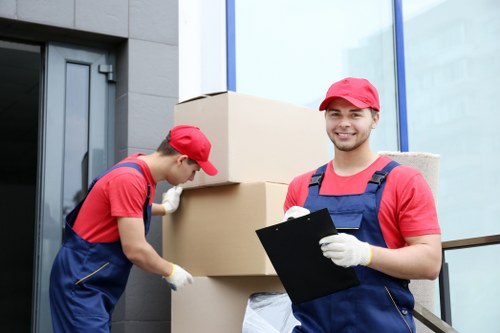 Clerkenwell Removals is committed to maintaining a safe, healthy, and controlled working environment for all employees, contractors, clients, and members of the public who may be affected by our activities. This health and safety policy sets out the standards and responsibilities that guide every stage of our removal services, from planning and loading to transport and unloading. Our aim is to prevent injury, reduce risk, and ensure that every move is carried out with care, professionalism, and consistent attention to safety.
We recognise that removal work can involve heavy lifting, time pressure, vehicle movement, and the handling of fragile or valuable items. For that reason, risk awareness is central to our operations. All team members are expected to follow safe working practices, use equipment correctly, and report concerns immediately. This policy applies to all aspects of Clerkenwell removals operations, whether the task involves domestic furniture, office equipment, storage items, or specialist belongings.
 The company will review this policy regularly to ensure it remains suitable, effective, and aligned with good practice. Safety is not treated as a separate task; it is part of daily decision-making. Every Clerkenwell removals service is planned with the wellbeing of people and property in mind, and every worker has a duty to contribute to that standard.
Management holds overall responsibility for implementing this policy and ensuring that safe systems of work are in place. Supervisors are required to brief teams before each job, identify foreseeable hazards, and confirm that equipment, vehicles, and lifting aids are fit for use. Employees must take reasonable care for their own safety and that of others, cooperate with safety instructions, and avoid actions that could create unnecessary risk.
To support this, we provide appropriate information, instruction, and training. Staff involved in removal services are expected to understand manual handling principles, load securing methods, safe stacking techniques, and how to work carefully in confined or busy environments. Where tasks require additional competence, work will only be assigned to suitably trained personnel. In every case, the emphasis is on preventing avoidable incidents before they occur.
 A key part of the policy is the identification and control of hazards. Typical risks in a removal company environment may include slips, trips, falls, repetitive strain, unstable loads, poor lighting, obstructed access, and vehicle-related hazards. These are managed through pre-job checks, clear communication, sensible scheduling, and the use of suitable tools and protective measures. If a condition cannot be made safe, the task will be paused until it can be addressed.
Manual handling is one of the most important areas of control in any moving operation. We aim to reduce lifting strain through team lifts, trolleys, dollies, straps, and correct technique. Workers are expected to assess the weight, shape, and stability of each item before attempting to move it. When an object is too heavy, awkward, or unsafe to handle alone, assistance must be requested. Rushing is never a substitute for safe practice in Clerkenwell removals.
Vehicles used in our operations must be inspected and maintained in good order. Drivers are responsible for carrying out basic pre-use checks and for securing loads so that items do not shift during transit. Seat belts must be worn where fitted, speed limits observed, and driving undertaken with full concentration. Safe loading and unloading are essential parts of our health and safety policy, since many accidents can occur at the beginning or end of a move.
Emergency procedures are also an important part of our control measures. Staff are expected to know how to respond to incidents such as injuries, road accidents, fire, or damage to property. First aid arrangements will be maintained, and any accident or near miss will be recorded, investigated, and used to improve future working practices. Learning from incidents helps strengthen the reliability of our Clerkenwell removals operations and supports continuous improvement.
 We also expect clients and third parties to cooperate with safety requirements where their premises are involved. Clear access routes, adequate parking arrangements, and the removal of obvious obstructions help reduce risk and improve efficiency. Our teams will make reasonable safety observations before starting work and may postpone activity if conditions are unsuitable. Protecting people always takes priority over completing a move quickly.
Personal protective equipment will be provided or required where necessary, depending on the task. This may include gloves, safety footwear, high-visibility clothing, and other suitable items. PPE is used alongside, not instead of, other controls such as planning and safe handling. Staff must keep equipment in good condition and use it correctly whenever the nature of the job requires it. Good housekeeping, tidy work areas, and careful placement of packing materials also help prevent accidents.
Clerkenwell Removals will not tolerate unsafe behaviour, misuse of equipment, or failure to follow established safety procedures. All workers are expected to promote a culture of responsibility, where concerns are raised early and dealt with constructively. This approach supports the smooth delivery of Clerkenwell removal services while protecting health, property, and reputation. Safety is a shared commitment, and it remains essential to the way we operate every day.
 In summary, this policy confirms our commitment to safe, careful, and well-managed working practices across all aspects of Clerkenwell removals. Through training, supervision, inspection, communication, and prompt reporting, we aim to reduce risk and maintain high standards at all times. Every member of the team is expected to support this commitment and help ensure that each move is completed responsibly, efficiently, and with due regard for the wellbeing of everyone involved.